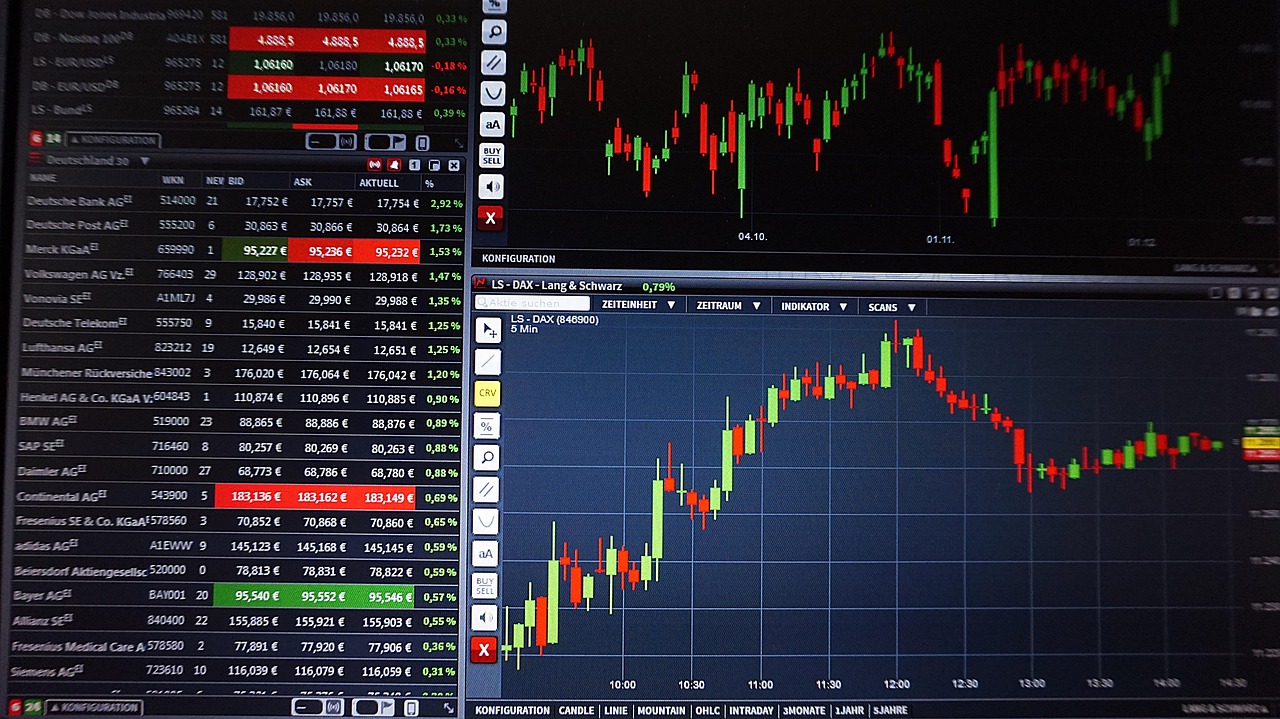
A capital gain is one of the two main ways to earn a return on an investment (the other being dividends). In financial theory it is defined as the growth in the market value of capital relative to the amount originally invested. A capital gain is the positive difference between the sale price of a share and its purchase price (acquisition cost).
The financial nature of a capital gain
A capital gain is the result of the market's valuation of the asset. Unlike dividends, which are periodic payments, a capital gain is realized only when a sale takes place.
- Realized: When you close the trade and the cash lands in your account. Only then does it become subject to taxation.
- Unrealized (on paper): When the price of your shares has gone up but you have not sold them yet. Not subject to taxation.
Key components of the calculation
- Cost basis: The acquisition price plus all direct costs (broker commissions, exchange fees, currency conversions).
- Sale price (net proceeds): The amount received from the sale, after deducting the costs of the sale itself.
- Disposal method (FIFO): In Bulgaria, if you buy shares of the same company at different prices and at different times, the first in, first out (FIFO) method applies when you sell. The first shares sold are deemed to be the ones bought earliest.
Tax treatment in Bulgaria under the Personal Income Tax Act (ЗДДФЛ)
In Bulgaria, how capital gains on financial assets are taxed for individuals depends entirely on where the exchange (market) on which the asset is traded is located.
Every investor is required to inform the state of their holdings abroad as of December 31 of the reporting year.
What is reported: Shares, units in collective investment schemes (ETFs) and other securities held in foreign companies.
How: You complete Part IV of Annex No. 8, describing the type of asset, the issuer and the acquisition value, converted into local currency at the Bulgarian National Bank (BNB) rate.
Tax-exempt gains (0% tax)
Under Art. 13 of ЗДДФЛ, income from the sale of shares and units is tax-exempt if the transactions were carried out on regulated markets in the European Union (EU) and the European Economic Area (EEA). This includes the Bulgarian Stock Exchange (BSE) as well as the major European exchanges such as XETRA (Germany), Euronext (France/Netherlands) and others. This is a huge advantage for Bulgarian investors, as it allows 100% of the gain to be reinvested and a potentially higher return to be achieved.
Reporting: Although no tax is due, this income is entered in Annex No. 13 for information purposes.
Taxable gains (10% tax)
If you trade on markets outside the European Economic Area (EEA), the gain is taxable.
- Examples: NYSE and NASDAQ (USA), the London Stock Exchange (LSE - post-Brexit), the exchanges in Japan, China and Canada.
- Rate: 10% on the net gain for the calendar year.
- Reporting: This income is entered in Annex No. 5.
Declaring gains and offsetting losses
Loss offsetting
You can reduce your taxable gain by the amount of losses realized in the same year. Losses realized by individuals in prior years cannot be deducted in the current or future periods. You cannot deduct a loss from 2025 against a gain in 2026. In Bulgaria (unlike the USA), individuals cannot carry capital losses forward to future years. If you end this year with a realized loss, that loss cannot be used for tax purposes in the future.
Bulgarian tax law (ЗДДФЛ) draws a clear distinction between taxable and tax-exempt income.
- Art. 13 of ЗДДФЛ defines income from the sale of instruments on regulated markets in the EU/EEA as tax-exempt.
- Since this income does not exist for tax purposes (it carries a 0% rate), the losses associated with it are likewise not recognized for tax purposes.
- Annex No. 5 of the annual tax return is divided into sections. When you calculate your "taxable income", you do the following:
Taxable income = (Sum of all TAXABLE gains) – (Sum of all TAXABLE losses)
Statutory 10% expense allowance
The taxable income from the sale or exchange of shares, units, compensatory instruments, investment vouchers and other financial assets, including crypto-assets, as well as from trading in foreign currency, is determined by taking the sum of the gains realized during the year, determined for each individual transaction, reduced by the sum of the losses realized during the year, determined for each individual transaction, and reducing the result by 10 percent for expenses.
Amended by State Gazette (ДВ) No. 106 of 2023, effective 01.01.2024; amended by State Gazette (ДВ) No. 54 of 2025
Exchange rate: All gains and losses must be converted into euro at the BNB central rate for the date of each individual transaction.
Reporting: Even if you have no realized gain, if you sold shares you are required to report them in the annual tax return (Annex No. 5). The deadline is April 30 of the following year.
Example
- You realized a $1000 gain from selling Apple shares (ticker AAPL - NYSE exchange) on 10.09.2025. At the euro/dollar exchange rate on that date, the gain equals 856 euro.*
- You realized a $500 loss from selling PayPal shares (ticker PYPL - NYSE exchange) on 16.10.2025. At the euro/dollar exchange rate on that date, the loss equals 429 euro.
- You also realized a 400 euro loss from selling shares of Bayerische Motoren Werke AG (ticker BMW - XETR exchange) on 12.06.2025.
- Your net gain is 856-429=427 euro.
- You deduct the statutory 10% expense allowance: 427 -10%= 384 euro is your taxable base (the 400 euro loss realized on the sale of BMW cannot be used for tax purposes, since it is tax-exempt).
- The tax due is 10% of the taxable base, which is 38 euro.**
*For this example, amounts are rounded down to the nearest 1 euro.
**For calendar year 2025 the official currency in Bulgaria is still the Bulgarian lev (BGN). All amounts in the tax return for 2025 must be filed in leva, while the final amount payable is paid in euro (the lev/euro rate is fixed at 1.95583 leva per 1 euro). For calendar year 2026 and onward, amounts are declared and paid only in euro.